The Danger Of The Faith

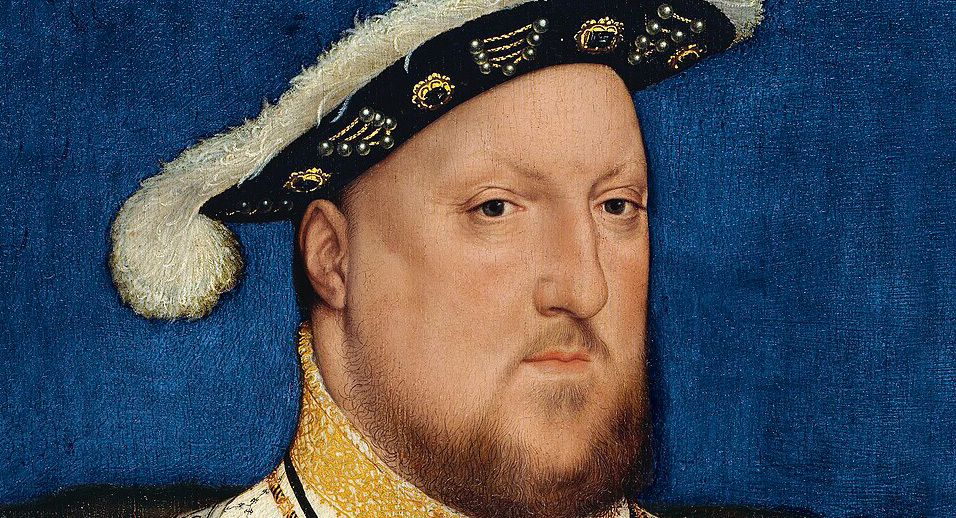
Henry VIII
For hundreds of years, the British monarch has held the title, “Defender Of The Faith.” I always thought “the faith” referred to the Christian faith. After all, the British monarch is the Supreme Governor of the Church of England, which is clearly a Christian church. Today, however, it’s unclear exactly what faith it is that the King of England defends.
This year King Charles recorded a warm greeting for British Muslims at Ramadan. Buckingham Palace later announced that he would not release a comparable Easter message, despite the King’s role as Supreme Governor of the Church of England. This came at a time when Christians, at 46%, were the largest, but no longer the majority religion in the U.K. After some criticism, the Royal Family's social-media account published a brief "Happy Easter" greeting on Easter Sunday. Unlike his Ramadan message, however, it consisted only of a short social-media post rather than a personal Easter message from the King. No public explanation for the different approach was offered.
The King is under no constitutional obligation to issue any Easter message. But neither is he required to issue a Ramadan message. The contrast lies not in what the King must do but in what he chooses to do. Those choices naturally raise questions about how he understands his role as Supreme Governor of the Church of England and Defender Of The Faith.
One wonders if the King is trying to distance himself from his traditional role as defender of one particular faith, the Christian faith as practiced by the Church of England. Supporters might argue that the King's role today is not to defend the doctrines of any particular religion, but to protect the freedom of every citizen to practice his or her own religion. That understanding differs significantly from the historical meaning of the monarch’s title.
As it turns out, the King’s current views on defending the faith are not new. As early as 1994, when he was Prince of Wales, King Charles said in a TV interview with Jonathan Dimbleby, speaking of his future role as King, that he would rather see his role as “Defender of Faith, not the Faith.” He said that “the” implied just one particular interpretation of the faith.
The monarch has been Defender Of The Faith for hundreds of years. Historically, there has been no doubt about what faith was in view. Pope Leo X originally bestowed the title “Defender Of The Faith” upon Henry VIII in 1521 for defending the seven sacraments of the Catholic Church against Martin Luther. After the English Reformation, the title was retained and came to signify the monarch's role as protector of the Church of England. The official 2026 Sovereign Grant Report, however, states “His Majesty is Supreme Governor of the Church of England and protects the space for Faith within the multi-faith nation” (emphasis added). That is quite a departure from tradition. One wonders if the current monarch is trading his traditional role as defender of one particular faith, the Christian faith of the Church of England, for some general role as defender of all faiths.
Does the King propose defending faith in general but no faith in particular? If so, are no faiths excluded? What about faiths that contradict one another? Muslims, for example, vehemently deny the deity of Christ, while Christians claim the deity of Christ as true and central to their faith. Can the King defend both positions?
Supporters of the King's position might say he is not defending the truth claims of every religion but rather the right of every citizen to practice his or her own religion. That is an important constitutional distinction. The King is constitutionally obligated to protect the religious freedom of all his subjects through the mechanism of the state. That duty, however, is different from the historic meaning of the title "Defender Of The Faith," which referred to Christianity as expressed by the Church of England. The historic title, “Defender Of The Faith,” did not arise as a defense of religious liberty in general but as a defense of the Christian faith and the Church of England in particular. It is a theological title.
A defense of faith cannot logically embrace the truth claims of both Christians and Muslims. If 'Defender of Faith' merely means defending the civil right of citizens to practice their religions, there is no contradiction. But if it means affirming the truth of conflicting religious claims, the concept is incoherent. As already noted, Christians affirm the deity of Christ while Muslims deny it. Since no theological principle can be true and untrue at the same time, a defense of both Muslim and Christian beliefs about Christ is illogical. Not even a King can suspend the law of non-contradiction.
Is the King distancing himself and his country from Christianity then? Is he catering to the Muslim minority? For the time being, his official title is the same as it has been for centuries. He is still Defender Of The Faith. If current trends continue, however, it may be only a matter of time before he will become the defender of faith in general, but none in particular. The historic office of the King was never intended to defend religion in the abstract. It was intended to defend the Christian faith as embodied in the Church of England. The UK needs more than a defender of nothing in particular. It needs a defender of historic Christianity. May God have mercy on the United Kingdom.