Stewarding Your Money

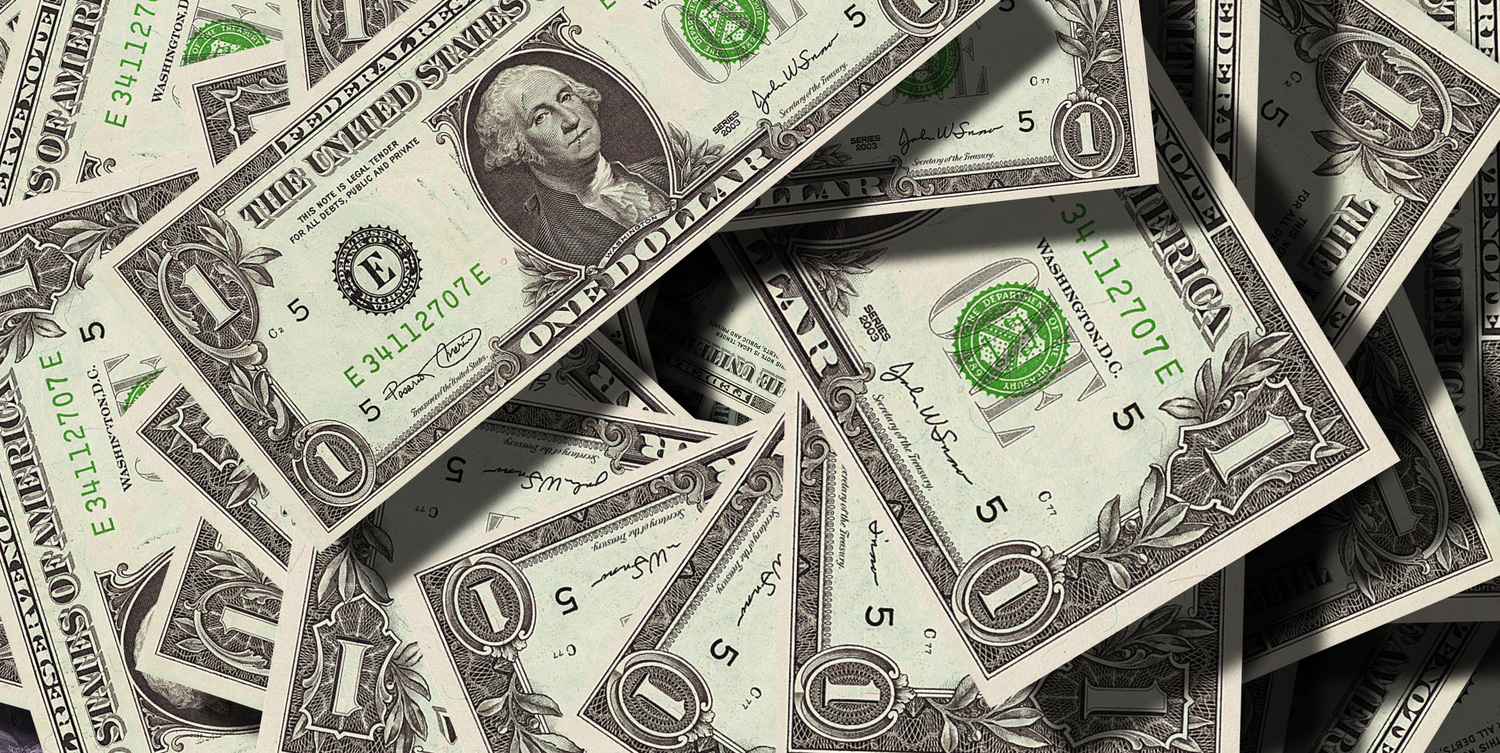
*Disclaimer: We are neither economists nor investment advisors. Nothing in this article is to be taken as investment advice. The authors encourage readers to study the issues raised here for themselves and to take whatever steps they deem necessary to protect their purchasing power and be good stewards of the worldly wealth God has entrusted to their care.
What causes prices to rise? If only a couple of things were becoming more costly, milk and eggs, for example, while other prices remained stable, it might be easy to explain why. But it isn’t only a couple of things that are becoming more expensive. The cost of virtually everything is rising across the board. Year after year, general price levels keep rising. Sometimes they rise faster than at other times, but the trend for decades has been relentlessly up.
To illustrate the severity of the problem, we remember the 1970s, when sandwich bread cost 26 cents a loaf, gasoline was less than 50 cents a gallon and a decent job paid $15,000 a year. What happened since then? Did bread become more valuable? Is there any material difference between a gallon of gasoline then and now? Why does it take so many more dollars to buy things today than it used to? Many things in the marketplace, like lumber, nails and cement, haven’t really changed over the years. Why do we need so many more dollars to buy them?
Myth 1: Inflation Is Rising Prices
Most people have been conditioned to believe that inflation is rising prices, but that is not true. Inflation is an increase in the supply of money and credit. Rising prices are a consequence of inflation, not inflation itself. The distinction is important, as will become evident.
Consider three definitions of inflation, a correct one from 35 years ago and two false ones from today:
1) Merriam-Webster, Webster’s Ninth New Collegiate Dictionary, 1991:
Inflation: an increase in the volume of money and credit relative to available goods resulting in a substantial and continuing rise in the general price level.
Note that Webster’s clearly and correctly explained rising prices as a consequence of inflation, which it properly defined as an increase in the supply of money and credit.
2) Federal Reserve Bank, federalreserve.gov/faqs/economy, 2026:
Inflation is the increase in the prices of goods and services over time.
Notice that our central bank, the Federal Reserve, makes no mention of an expanding money supply. It obscures the cause and effect relationship between “money printing,” which is what inflation really is, and rising prices, which is merely an effect of inflation.
3) ChatGPT, 2026:
Question: What is inflation?
Answer: Inflation is the rate at which the general level of prices for goods and services rises over time in an economy.
Here, ChatGPT simply repeats the generally accepted and deliberately cultivated misconception that inflation and rising prices are synonymous. As if to erase any doubt, it went on to elaborate with a definition of the Consumer Price Index (CPI): “A common measure of inflation, tracking the prices of a ‘basket’ of everyday items” (emphasis added). Note that ChatGPT made no mention at all of the supply of money and credit. After decades of brainwashing, not one person in 1,000 has a correct understanding of what inflation really is. This is because it has been deliberately re-defined as rising prices instead of an increase in the supply of money and credit.
Notice how the definition of inflation morphed in just 35 years. The Federal Reserve knows very well that its definition of inflation is false and misleading. Its false definition diverts attention away from the source of the problem, which is its own “money printing.” Inflation is what causes prices to rise. Rising prices are merely a symptom of the inflationary disease.
One way to look at the problem is to consider what happens to money when the supply of it increases. When a government’s central bank, like the U.S. Federal Reserve, creates new money and puts it into circulation, the value of each unit of currency already in circulation decreases. It is like watering down a pan of soup. You can increase the volume of chicken noodle soup that way, but each spoonful will have less chicken and fewer noodles than it did before. Each spoonful will have less value, requiring more spoons of soup to get the same amount of chicken and noodles. Something similar happens when you inject more money and credit into an economy. The volume of dollars goes up but each one has less value. That’s why it takes more “watered down” dollars to buy things.
This explanation is simplified and our soup analogy only works to a point, but the basic concept may be understood this way: Inflation is an increase in the supply of money and credit, which is a deliberate policy of the government and the banking system. When the government floods the economy with extra dollars, sometimes called “money printing,” the supply of money and credit expands more rapidly than the supply of goods and services, and that causes prices to go up. Inflating the supply of dollars cheapens them, so it takes more of them to buy things.
Another name for this process is currency debasement. This is the deliberate reduction of the value of a currency by inflating its supply. Governments and their central banks do this on purpose for a variety of reasons that are beyond the scope of this article. Suffice it to say that it amounts to deliberate theft from the public at large. The importance for individuals, especially for savers and retirees on fixed incomes, is that inflation continually eats away at the value of their savings and incomes, making it harder and harder to make ends meet.
Inflation is really a hidden and insidious tax. It steals value from dollars already in circulation and transfers that value to the people creating the new dollars. It is legalized counterfeiting. It has been jokingly said that government passed laws against private counterfeiting because it doesn’t like competition.
The people who get their hands on newly created inflationary dollars first, before general price levels rise in response, are the people who benefit the most from the resultant transfer of wealth. As the new dollars move through the economy, prices are bid higher and higher. By the time all the new dollars have thoroughly circulated throughout the economy, general price levels have risen and all the dollars in circulation have been reduced in value. This is particularly harmful to savers and pensioners.
Most people do not understand the underlying cause of chronic price increases, which is chronic inflation, so they tend to blame the wrong people for those increases. They blame businesses for raising prices instead of government and its central bank for inflating the money supply.
Long before modern economics existed, God addressed this very practice through the prophets. In Isaiah’s day, the nation’s money was silver coin, and corrupt leaders began mixing the silver with cheaper metals to stretch their supply. God described the situation with piercing clarity:
“Your silver has become dross.” - Isaiah 1:22
In ancient Israel, this was more than bad economics; it was moral indictment. Debasing the money was a way for the powerful to enrich themselves at the expense of ordinary people. It was corruption as policy, injustice disguised as economics and a sign that the nation’s moral foundation was crumbling.
From God’s point of view, this is not merely a matter of economics, it is a matter of justice. Scripture consistently condemns practices that reduce value, erode fairness or quietly steal from the vulnerable. In biblical language, currency debasement is simply another form of “dishonest scales” and God calls such practices an abomination. In other words, deliberately reducing the value of money in circulation is a form of corruption that God condemns.
Inflation, when understood as currency debasement, is not just a technical matter for economists. It is a spiritual matter that reveals the character of a nation’s leadership and the integrity of its economic systems. And Scripture invites God’s people to see it through His eyes, clearly, soberly and with a commitment to justice and righteousness.
Myth 2: Government Statistics Like the CPI Are Reliable
The Consumer Price Index (CPI) is a government-produced measure of changes in consumer prices. It consistently understates the rate of increase, giving a false impression of moderation. A trip to the grocery store will prove this point.
Among other things, the understated CPI can lead people to believe that their wage increases and investment incomes are keeping pace with general price increases when they may actually be falling behind. Real prices may be rising twice as fast as the CPI indicates or more. Government statistics should always be taken with a grain of salt and checked against first-hand experience. Consumers would do well to calculate their own “CPI” by keeping close tabs on their own personal expenses. This requires some effort, but doing so will provide a more realistic picture of actual cost increases than the official CPI does.
Government has many incentives to understate the CPI. One is that Social Security increases are indexed to the CPI. Another is that understating the CPI covers up inflationary excesses.
With a correct understanding of inflation, it becomes clear that relying upon dollars as a long-term store of value is like storing water in a leaky bucket. Moreover, people are conditioned to use the dollar as a measure of value. If you ask what something is worth, the reply will usually be some number of dollars. In this sense, the dollar is a kind of yardstick used to measure the value of things. A shrinking dollar, however, is like a yardstick that is not really 36 inches long. Measuring value in inflated dollars can lead to serious mistakes and dislocations in the economy.
The Bible does not mention the CPI, but it has a great deal to say about honest measurement. In the ancient world, weights and measures were the key economic tools of the day. If you wanted to cheat someone you secretly rigged the scales. God’s response was unambiguous:
“Dishonest scales are an abomination to the LORD.” - Proverbs 11:1
“You must have accurate and honest weights.” – Deuteronomy 25:15
A dishonest scale doesn’t look dishonest. It looks trustworthy. But a dishonest scale quietly shifts value from one party to another. That is why God calls it an abomination, not because it is defective technically, but because it is defective morally.
In the same way, when the CPI becomes a “dishonest scale,” one that understates the true cost of living, it functions like a yardstick that is not 36 inches long. People measure their wages, savings and retirement income against it and assume they are doing fine. But the yardstick deceives. The measurement is false and the consequences fall hardest on those least able to absorb them: retirees, low wage earners and families living close to the margin. God cares deeply about accurate measures because inaccurate ones distort reality and harm people. When the official numbers mask the true erosion of purchasing power, the effect is the same as the dishonest scale of ancient times. The powerful people benefit while ordinary people suffer.
In Part Two of this essay, we will continue with an examination of some common misconceptions about modern banking. We will also explore some of the social damage done by chronic inflation and close with a few final thoughts for your consideration.